
The Finance Ministry has refuted allegations that US pressure influenced the decision to levy a 0.4 per cent Merchant Discount Rate (MDR) on select UPI payments. The ministry clarified that the NPCI guidelines prioritise RuPay credit cards on UPI to promote domestic alternatives and ensure a self-sustaining revenue model for smaller domestic companies, countering claims of favouring foreign payment providers.
The Finance Ministry has refuted allegations that US pressure influenced the decision to levy a 0.4% Merchant Discount Rate (MDR) on select UPI payments. It clarified that NPCI guidelines prioritise RuPay credit cards on UPI to foster a domestic payment ecosystem and that the MDR introduction aims to create a sustainable revenue model for smaller domestic companies, thereby protecting India's sovereignty in digital payments.

A national study of top 75 Indian B-schools reveals a significant competency gap in AI skills among management graduates, with industry expectations far exceeding current MBA capabilities. A new framework by AIMS, EPSI, and IMC highlights the urgent need for management education to adapt to an AI-led workplace, emphasizing behavioural competencies alongside data fluency.

Analysts predict that the Reserve Bank of India's interest rate decision, the evolving situation in West Asia involving the US-Iran conflict, and crude oil prices will be the primary factors influencing investor sentiment in the Indian stock market this week.

A new Merchant Discount Rate (MDR) on UPI transactions above Rs 2,000, effective October 15, could force small merchants and price-sensitive consumers to revert to cash, according to economic think tank GTRI. The move, which introduces a 0.4 per cent MDR with a Rs 300 cap and concessional rates for specific categories, is questioned by GTRI founder Ajay Srivastava, who suggests it's not a revenue issue for the government but potentially a response to US pressure regarding UPI and RuPay's preferential market position.

The Finance Ministry is set to commence its pre-budget meetings on October 12, initiating preparations for the Union Budget 2027-28, which will be the fourth budget of the Modi 3.0 government and the tenth for Finance Minister Nirmala Sitharaman.

India's wholesale price-based inflation (WPI) increased to 9.92 per cent in August, up from 9.78 per cent in July, primarily due to rising prices across food, manufactured items, and fuel and power sectors.

The Indian government has introduced a 0.4% transaction fee on Unified Payments Interface (UPI) payments exceeding Rs 2,000 for merchants, effective October 15, marking the end of nearly six years of free service. Person-to-person transfers and small-value transactions below Rs 2,000 remain free. The new Merchant Discount Rate (MDR) is capped at Rs 300 for transactions above Rs 75,000, with differentiated rates for essential sectors and investments, and safeguards to prevent costs from being passed to consumers.
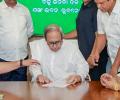
BJD chief Naveen Patnaik has voiced concerns over the Centre's decision to introduce Merchant Discount Rate (MDR) charges on UPI transactions above Rs 2,000 from October 15, urging protection for small traders and common people. This move has sparked a political debate, with the BJP defending the charges as beneficial for digital infrastructure and largely not impacting consumers, while the Congress and traders' associations criticise it as an additional burden.
The Congress party has criticised the government's recent notification regarding UPI transactions, alleging it paves the way for users to be charged fees, particularly for transactions above Rs 2,000. The party claims the government lacks transparency and questions if the move is to benefit American firms. The government, however, states that charges are necessary for the system's sustainability and infrastructure upgrades, with the Finance Minister clarifying that Merchant Discount Rate (MDR) applies to merchants, not customers.

Former Rajasthan chief minister Ashok Gehlot has criticised the Centre for introducing a 0.4% charge on UPI transactions above Rs 2,000, alleging the decision was influenced by pressure from the United States and its payment companies like Visa and Mastercard. He highlighted a perceived shift in the government's stance on Merchant Discount Rate (MDR) for UPI, claiming it would ultimately burden consumers and small businesses while benefiting American firms.

Sri Lankan legend Sanath Jayasuriya has lauded Indian teen cricketer Vaibhav Sooryavanshi, calling him a 'different kind of talent' and the 'future for India', despite his recent exclusion from the playing XI against Afghanistan.

'Being the defending champions certainly gives us confidence, but every Olympiad is a new event and starts from scratch.'

Congress leader Rahul Gandhi has accused the Modi government of quietly paving the way for imposing fees on UPI transactions, alleging it's a surrender to American pressure. The government's recent notification exempts charges only up to Rs 2,000, sparking concerns that higher value transactions and eventually all UPI payments could incur fees. Finance Minister Nirmala Sitharaman, however, clarified that Merchant Discount Rate (MDR) applies to merchants, not customers, and supports digital infrastructure.

The Retailers Association of India (RAI) has voiced concerns that the government's new 0.4 per cent Merchant Discount Rate (MDR) on UPI transactions above Rs 2,000 could reverse the progress of digital payment adoption among small retailers. This fee, effective October 15, places the burden on merchants operating on thin margins, potentially pushing them back to cash transactions and undermining the government's formalisation agenda, especially ahead of the festive season.

Krunal Pandya kept his India comeback hopes alive after missing the Afghanistan T20I squad, following a strong IPL season where he impressed with bat and ball.

The Indian government has introduced a 0.4% Merchant Discount Rate (MDR) on UPI person-to-merchant (P2M) transactions exceeding Rs 2,000, effective October 15. This move ends nearly six years of fully free UPI payments, though person-to-person (P2P) transfers and small P2M payments remain free. The charges aim to bolster investment in UPI infrastructure, with specific exemptions and caps for essential sectors.

The SIP culture has been rapidly growing in India among retail investors. As per AMFI data, monthly SIP contributions crossed 31,961 crore in July 2026, which is nearly a 10x jump from 3,122 crore recorded in April 2016.
The SIP culture has been rapidly growing in India among retail investors. As per AMFI data, monthly SIP contributions crossed 31,961 crore in July 2026, which is nearly a 10x jump from 3,122 crore recorded in April 2016.

The Supreme Court has dismissed a Public Interest Litigation challenging the constitutional validity of the 2018 amendment to the Scheduled Castes and Scheduled Tribes (Prevention of Atrocities) Act. The amendment had restored restrictions on anticipatory bail and removed requirements for preliminary inquiry and prior approval before arrest. The court cited its 2020 verdict which had already upheld these amended provisions, rejecting arguments about potential misuse and "reverse discrimination."

Indian banks anticipate a reduction of up to 50 basis points in their funding costs due to a surge in liquidity from robust Foreign Currency Non-Resident (Bank), or FCNR (B), flows, lessening their reliance on more expensive certificates of deposit (CDs).

Finance Minister Nirmala Sitharaman announced that the Goods and Services Tax (GST) Council's October 7 meeting will focus on 'GST 2.0' process reforms, including e-invoicing and input tax credit rules, while also addressing complex issues surrounding the taxation of the digital economy and cryptocurrency.

India Under-19 secured a narrow seven-run victory over Australia U-19 in a rain-affected first Youth ODI. Anvay Dravid's explosive late innings and Yashbardhan Chauhan's all-round performance, including a half-century and two wickets, were pivotal. The match also marked the U19 debut of Aaryavir Sehwag, who contributed 28 runs.

The Finance Ministry has clarified that the 0.4 per cent Merchant Discount Rate (MDR) on UPI transactions above Rs 2,000, effective October 15, is not expected to increase cash transactions or cause inflation. The ministry also dismissed allegations of US pressure influencing the decision, asserting that the policy aims to promote RuPay credit cards within the UPI ecosystem, and a monitoring mechanism will ensure the MDR burden is not passed on to consumers.

Hyundai Motor India is set to outpace the broader passenger vehicle market, projecting an 8-10 per cent domestic sales growth in H2FY27, fueled by strategic launches of a new mid-size SUV and a dedicated electric vehicle, alongside increased production capacity.

Sanju Samson has been appointed Brand Ambassador of Jan Kaushal Kendra, Moti Nagar, with Delhi CM Rekha Gupta highlighting his connection with the capital and role inspiring youth.

Andhra Pradesh Chief Minister N Chandrababu Naidu has set an ambitious target for district collectors to achieve a 15-20 per cent growth rate, building on the state's 13.4 per cent growth in Q1 FY27, the highest in India.
RBI Deputy Governor S C Murmu stated that the introduction of merchant discount rate (MDR) on UPI transactions is unlikely to cause a shift back to cash, despite some concerns, emphasising that MDR will help the payments ecosystem recover costs.

The Indian government has introduced a 0.4% fee on UPI transfers above Rs 2,000 made to merchants, effective October 15, ending nearly six years of free merchant payments. This move led to initial rallies in fintech stocks like Paytm and Mobikwik, though some later pared gains. Person-to-person transactions and small payments remain free for customers, with the fee being a Merchant Discount Rate (MDR).

Shares of fintech firms, particularly Paytm, saw significant movement after the Indian government introduced a 0.4 per cent fee on UPI transfers exceeding Rs 2,000 made to merchants, effective October 15.

Ishan Kishan explained how he switches from long-format cricket to T20s within days, stressing quick adaptation, a calm mindset and understanding his role during partnerships with teammates.

Five southern states are stepping up coordination on delimitation, tax devolution and language issues, reviving calls for a stronger collective South platform.

The Indian government has mandated that banks and payment providers cannot levy charges on UPI transactions up to Rs 2,000 or on payments made via RuPay debit cards. This directive follows an amendment to the Payment and Settlement Systems Act, 2007, aiming to sustain and expand the digital payments ecosystem.

If a bank sold the policy, complain to its grievance cell and, if necessary, escalate the complaint to the Reserve Bank of India Ombudsman.

'The fundamental issue that I have raised, how come India's GDP in current prices went down from Rs 86 lakh crore down to Rs 80 lakh crore -- a staggering erasure of Rs 6 lakh crore. This disappearance of Rs 6 lakh crore has not been answered by anyone.'

The RSS-affiliated Swadeshi Jagran Manch (SJM) has urged the government to reconsider imposing a merchant discount rate (MDR) on UPI transactions above Rs 2,000, arguing that the costs do not warrant such a move. This comes after the government announced a 0.4 per cent fee on merchant transfers over Rs 2,000 from October 15, while assuring that person-to-person and small payments remain free. SJM co-convener Ashwani Mahajan highlighted that banks have not demanded MDR and that UPI has reduced their transaction costs.

SEBI Chairman Tuhin Kanta Pandey stated that the National Stock Exchange (NSE) has not submitted any proposal seeking approval to trade on its own platform after getting listed, and such trading is currently not permitted. He also confirmed that SEBI would examine concerns raised by brokers and asset management companies regarding the new UPI Merchant Discount Rate (MDR) framework.

Indian head coach Amol Muzumdar acknowledged the absence of 'clutch player' Jemimah Rodrigues due to injury for the Women's Asia Cup but emphasised the team's strong hunger for success in upcoming tournaments, including the Asia Cup and Asian Games.

Union Finance Minister Nirmala Sitharaman called upon 'Gen Z' and 'Gen Alpha' to assume leadership, prioritise the nation, and contribute to its growth, rather than questioning what the country has done for them.
Left parties have strongly condemned the government's decision to impose charges on UPI payments exceeding Rs 2,000, with CPI General Secretary D Raja alleging the move was made under "US pressure" to favour foreign payment companies. Both CPI and All India Forward Bloc demand the withdrawal of this "anti-people decision," arguing it burdens consumers and merchants while undermining UPI's role as a public digital infrastructure. They highlight concerns that the charges weaken India's digital sovereignty and serve commercial interests of foreign corporations like Visa and Mastercard.
